
Electricity Generated Where It Gets Used
Solar Panel Installation in Mankato for property owners reducing long-term energy costs and grid dependence
Minnesota homeowners looking for energy solutions that produce electricity for decades without ongoing fuel costs rely on solar panel installations that convert sunlight into usable current throughout the day. Key City Electric designs and installs solar systems across Mankato, North Lakota, Saint Peter, Lake Crystal, Madison Lake, and Eagle Lake, engineering arrays that match each property's roof orientation, shading conditions, and electrical consumption patterns. Panels generate the most power during midday hours when production peaks, and inverters convert direct current from the array into alternating current that either powers household circuits immediately or feeds back into the grid through net metering agreements.
System design requires calculating annual sunlight exposure based on roof pitch and azimuth, evaluating electrical service capacity to handle bidirectional power flow, and sizing inverters to match panel output without exceeding utility interconnection limits. Mounting hardware must penetrate roofing materials without creating leak points while withstanding wind loads and snow accumulation common to the region.
Request a site evaluation to assess your roof condition, measure available installation area, and estimate annual energy production based on your location.
How Solar Systems Address Energy Costs
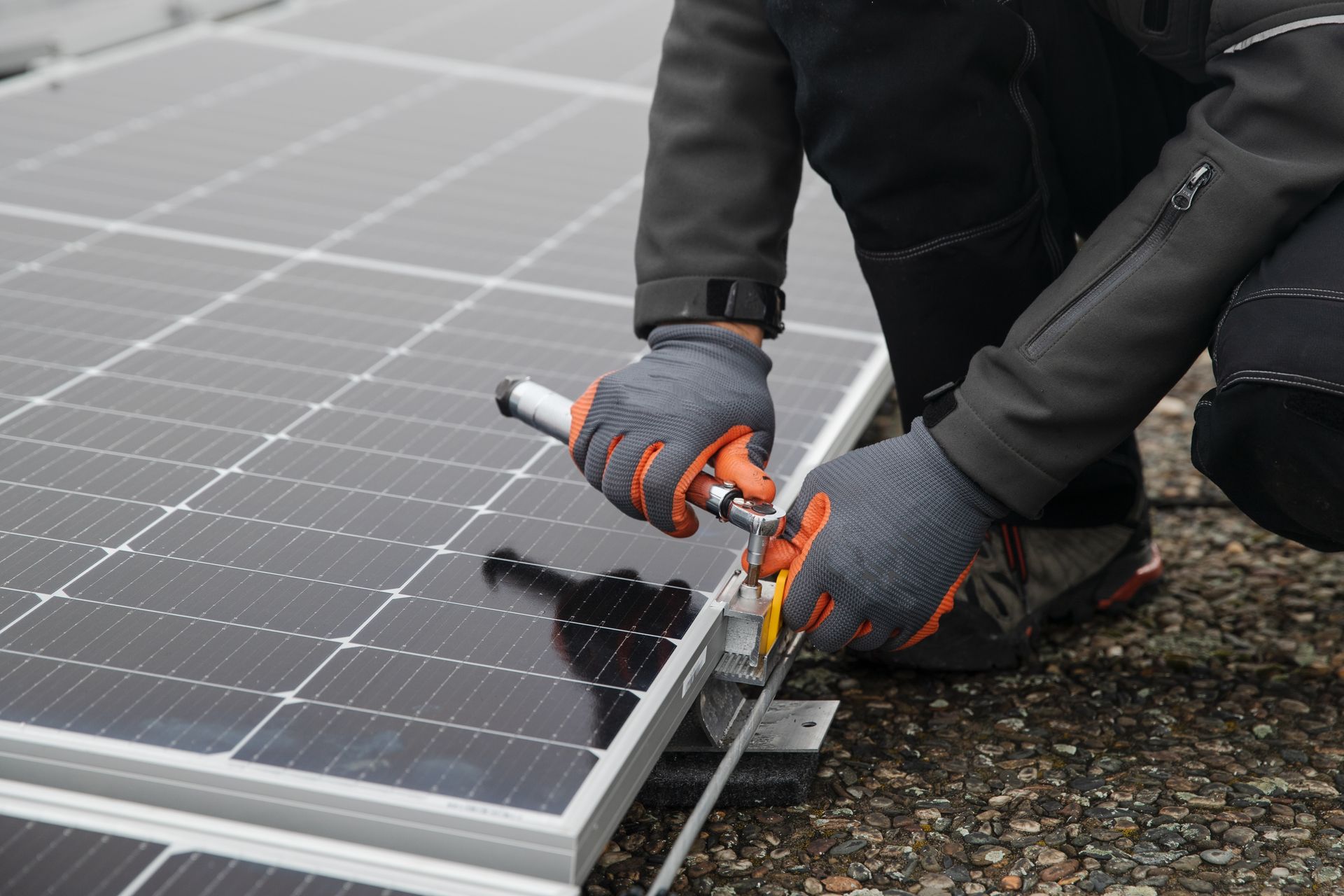
Solar installations involve mounting racking systems to roof framing, securing photovoltaic panels in series strings, running conduit from the array to inverter locations, and connecting output circuits to your main electrical panel through code-compliant disconnects and metering equipment. Each component must meet National Electrical Code standards for outdoor installations and utility interconnection requirements specific to your service provider.
Once the system activates, your electric meter slows or reverses during sunny periods as solar production meets or exceeds household demand, and grid power supplements only when clouds reduce output or nighttime consumption exceeds daytime generation credits. Monthly utility bills reflect the net difference between energy consumed and energy produced, with surplus production banking credits during high-output months that offset consumption during shorter winter days.
Solar arrays pair with battery backup systems to store excess production for use during outages or peak-rate periods, creating fully independent power capability that functions regardless of grid status. System monitoring tracks production in real time, alerting to performance drops that indicate shading issues, panel soiling, or component failures requiring attention.
Answers to Frequent Service Questions
Solar panel installations raise practical questions about system performance, installation requirements, and long-term operation that affect planning decisions for properties throughout the service area.
What happens during winter months when daylight hours decrease?
Solar panels continue generating power whenever sunlight reaches the array, though daily production totals drop during shorter winter days, requiring grid power to supplement household demand and drawing on net metering credits accumulated during summer months.
How does roof condition affect solar installation feasibility?
Roofs nearing the end of their service life should be replaced before panel installation to avoid the cost of removing and reinstalling the array during future roofing work, and installers inspect sheathing and framing to confirm structural capacity for additional load.
What determines how many panels a property needs?
System size depends on annual electricity consumption measured in kilowatt-hours, available roof area with proper sun exposure, and whether the goal is offsetting partial or total grid usage, with most residential installations ranging from fifteen to thirty panels.
How long does the installation process typically take?
Panel mounting and electrical connections generally complete within two to four days depending on array size and roof complexity, followed by utility inspection and interconnection approval before the system can begin net metering operation.
When is the optimal time to install solar panels in Mankato?
Spring and fall offer moderate temperatures that simplify rooftop work, though installations proceed year-round with systems activated as soon as utility interconnection approval completes regardless of season.
Key City Electric handles permit applications, utility coordination, and code inspections throughout the installation process, ensuring your solar system meets all technical and regulatory requirements. Arrange a solar consultation to review your energy bills and discuss system options tailored to your property layout.