
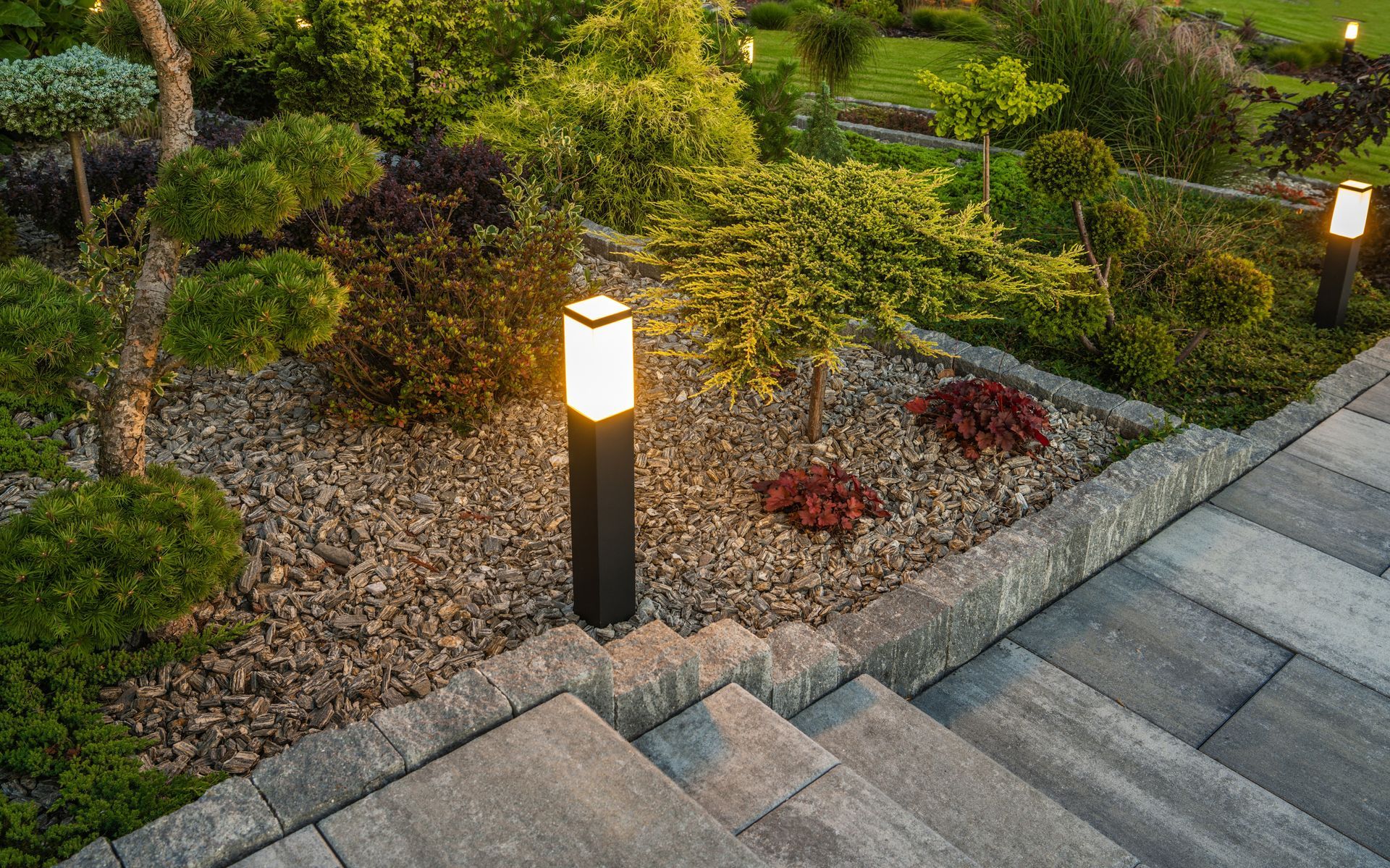
Visibility and Security After Sunset
Outdoor Lighting Installation in Mankato for properties requiring improved safety along pathways and building perimeters
Outdoor lighting installations address specific property goals ranging from illuminating entry steps to highlighting architectural features, and Key City Electric designs systems that combine functional pathway lighting, security fixtures for building perimeters, and accent lights for landscapes and exterior details throughout Mankato, North Mankato, Saint Peter, Lake Crystal, Madison Lake, and Eagle Lake. Proper lighting eliminates dark zones near doorways, stairs, and driveways where visibility drops create trip hazards and obscure approaching visitors. Installations require weatherproof fixtures rated for local temperature extremes, burial-depth wiring that withstands freeze-thaw cycles, and control systems that automate operation based on daylight sensors or programmable schedules.
System design begins with identifying areas that need illumination, selecting fixture types appropriate for each location, calculating voltage drop across low-voltage circuits, and planning wire routes that avoid future landscape disruptions. Transformers step down line voltage to safer levels for pathway and accent lighting, while perimeter security fixtures often operate at full voltage for maximum output.
Arrange a property consultation to identify lighting priorities, discuss fixture options, and develop a layout that addresses both functional needs and aesthetic preferences.
What You Notice Once Exterior Lighting Is Finished
Outdoor lighting installations involve trenching for underground wiring, mounting fixtures to building surfaces or landscape stakes, connecting circuits to transformers or direct power sources, and programming timers or photocells that control operation without manual switching. Each fixture location considers beam angles, mounting heights, and light distribution patterns that eliminate glare while providing adequate illumination for the intended purpose.
Once activated, pathways remain visible throughout evening hours, entryways display house numbers clearly for emergency responders, and motion-activated perimeter lights respond to movement near garages and side yards. LED technology reduces energy consumption compared to older halogen and incandescent systems while delivering consistent color temperature and eliminating frequent bulb replacements that plague traditional outdoor fixtures.
Modern control systems allow zone-based operation that adjusts lighting intensity by area and time, dimming decorative accent lights after midnight while maintaining full-brightness security lighting near entry points. Smart controls integrate with home automation platforms, enabling remote operation and scheduling adjustments that adapt to seasonal daylight changes without manual reprogramming.
Questions Before Starting Your Project
Outdoor lighting installations raise planning questions about fixture selection, power requirements, and operational control that affect both residential and commercial applications throughout the service area.
What fixture types work best for different outdoor applications?
Pathway lights use downward-focused beams to illuminate walking surfaces without light trespass, wall-mounted floods provide broad security coverage, and accent fixtures use narrow beams to highlight architectural details or landscape features with directed light placement.
How does low-voltage lighting differ from line-voltage systems?
Low-voltage systems operate at 12 or 24 volts through transformers that reduce shock hazards and allow simpler DIY fixture repositioning, while line-voltage fixtures deliver higher output for security applications but require licensed installation and weatherproof junction boxes.
What determines how many circuits an outdoor lighting system needs?
Circuit quantity depends on total fixture count, wire run lengths that affect voltage drop, and whether different zones require independent control for functional versus decorative lighting that operates on separate schedules.
How do control systems automate outdoor lighting operation?
Photocell sensors detect ambient light levels and activate fixtures at dusk, programmable timers turn lights off at specified hours to conserve energy, and motion sensors trigger security lighting only when activity occurs in monitored zones.
When does landscape lighting installation coordinate with other property work?
Installing lighting before final landscaping allows concealed wiring and prevents disturbing established plantings, though retrofitting existing landscapes remains feasible using directional boring techniques that minimize surface disruption in Mankato properties with mature vegetation.
Key City Electric customizes outdoor lighting designs to match your property layout and operational goals, ensuring fixtures provide adequate illumination without excessive energy consumption or light pollution. Request a lighting consultation to discuss fixture options and develop a system plan tailored to your exterior spaces.