
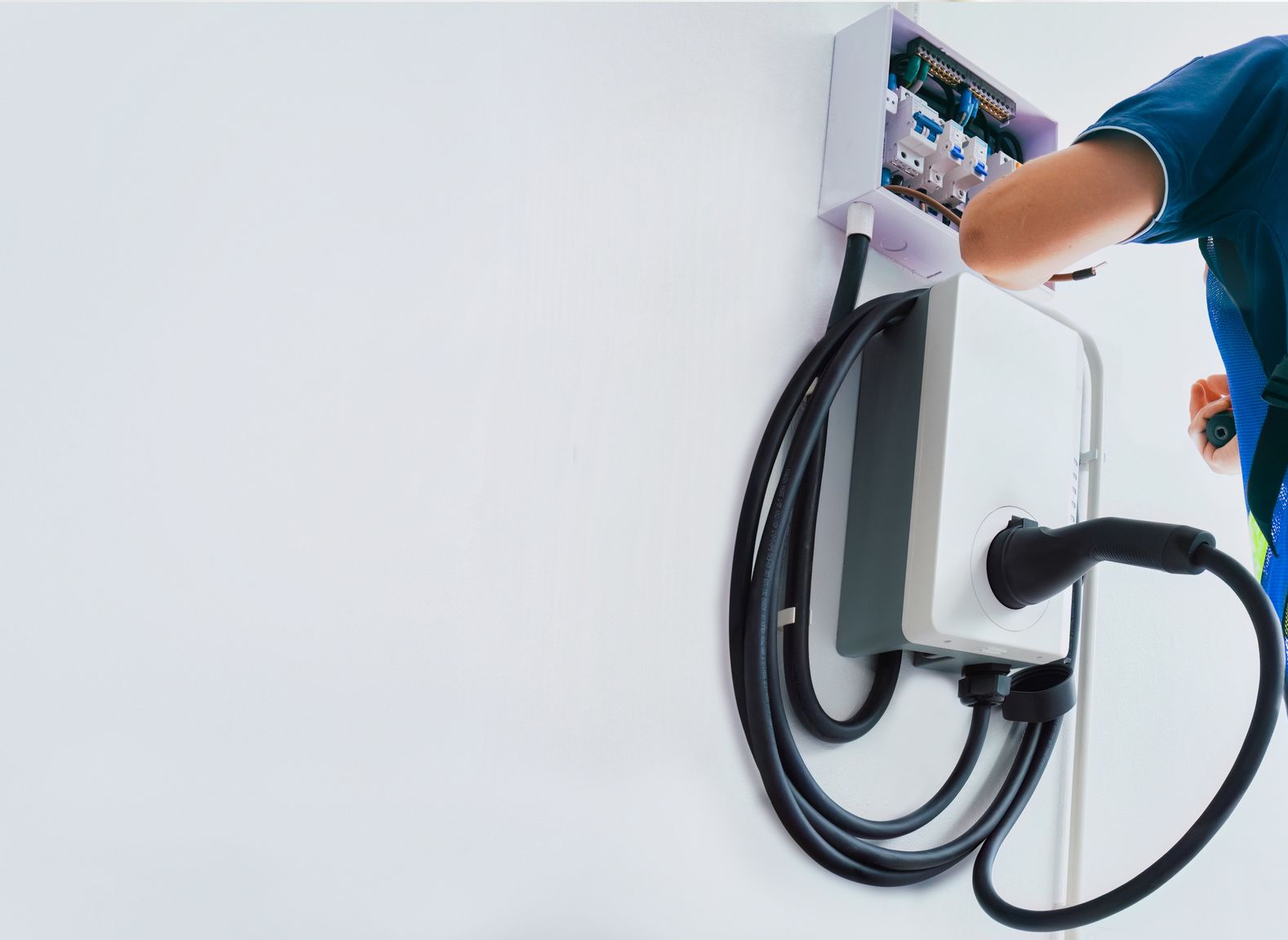
Charging Infrastructure Built Into Your Property
EV Charger Installation in Mankato for vehicle owners eliminating fueling delays and public charger dependence
Level 2 chargers deliver 240-volt power that refills electric vehicle batteries in hours rather than the extended overnight periods required by standard 120-volt outlets, and proper installation requires circuit capacity evaluation, dedicated breaker installation, and weatherproof equipment mounting. You notice the difference immediately when plugging in after work produces a fully charged vehicle by morning, eliminating range anxiety and the inconvenience of locating available public charging stations. The growing adoption of electric vehicles throughout Mankato, North Mankato, Saint Peter, Lake Crystal, Madison Lake, and Eagle Lake drives demand for home charging solutions that Key City Electric installs with attention to electrical panel capacity, outdoor wiring protection, and charger compatibility with current and future vehicle models.
Installation begins with evaluating whether your electrical service has spare capacity for a 40- or 50-amp charging circuit, determining the optimal charger location based on vehicle parking patterns, and running appropriately sized conductors from the panel to the mounting point. Many properties require service panel upgrades to support charging loads without overloading existing circuits, particularly when adding EV chargers to homes built before high-amperage appliances became common.
Schedule an electrical assessment to measure available panel capacity and identify any service upgrades needed before charger installation proceeds.
Why Proper Circuit Design Works for Vehicle Charging
EV charger circuits require dedicated breakers sized to match charger amperage ratings, GFCI protection to prevent ground faults during wet conditions, and conduit runs that protect wiring from physical damage and moisture intrusion whether installed in garages, carports, or outdoor locations. Key City Electric mounts chargers at heights that prevent cord strain while allowing easy plug access, and installs disconnect switches when code or charger manufacturers require manual isolation capability.
After installation, you plug in when parking and wake to a fully charged battery without planning charging stops around daily schedules or competing for public charger availability during peak hours. Charging occurs overnight when electricity rates typically run lower, and smart chargers allow scheduling that delays charging until off-peak periods begin, reducing operating costs compared to daytime public charging rates.
Charger installations accommodate future vehicle additions by selecting units with sufficient amperage for faster-charging models or installing conduit pathways that simplify adding second chargers when households adopt multiple electric vehicles. Hardwired chargers offer permanent installation security, while plug-in models provide portability for property owners who may relocate.
Common Questions About This Service
EV charger installations involve electrical considerations and practical decisions that property owners evaluate before committing to home charging infrastructure across the Mankato service area.
What electrical capacity does a Level 2 charger require?
Most residential Level 2 chargers draw between 32 and 48 amps at 240 volts, requiring dedicated circuit breakers and appropriately sized conductors that many older electrical panels cannot support without service upgrades to increase total amperage availability.
How does outdoor installation differ from garage mounting?
Outdoor chargers require NEMA-rated weatherproof enclosures and conduit systems that prevent moisture entry, while garage installations allow simpler surface-mounted wiring and standard electrical boxes, though both locations need proper circuit protection and grounding.
What determines charger placement on the property?
Charger location depends on where vehicles park regularly, proximity to the electrical panel to minimize wiring costs, and whether installation occurs in attached garages, detached structures, or outdoor parking areas that require longer conduit runs and additional weatherproofing.
How long does a typical EV charger installation take?
Straightforward garage installations with available panel capacity generally complete within four to six hours, while service upgrades, outdoor installations, or long conduit runs extend timelines to full-day projects depending on site-specific conditions.
When should property owners install EV chargers relative to vehicle purchase?
Installing chargers before vehicle delivery allows immediate home charging capability and eliminates dependence on public infrastructure during the initial ownership period, though existing EV owners benefit equally from adding home charging to replace ongoing public charger use.
Key City Electric evaluates your electrical service, discusses charger options compatible with your vehicle specifications, and completes installations that meet code requirements and manufacturer guidelines. Contact the company to arrange an on-site charger assessment and capacity review.